Eden Neumann · 19 November 2026
Urban Infrastructure Funding Models Adapt as LED Networks Integrate with Municipal Wildlife Monitoring Programs
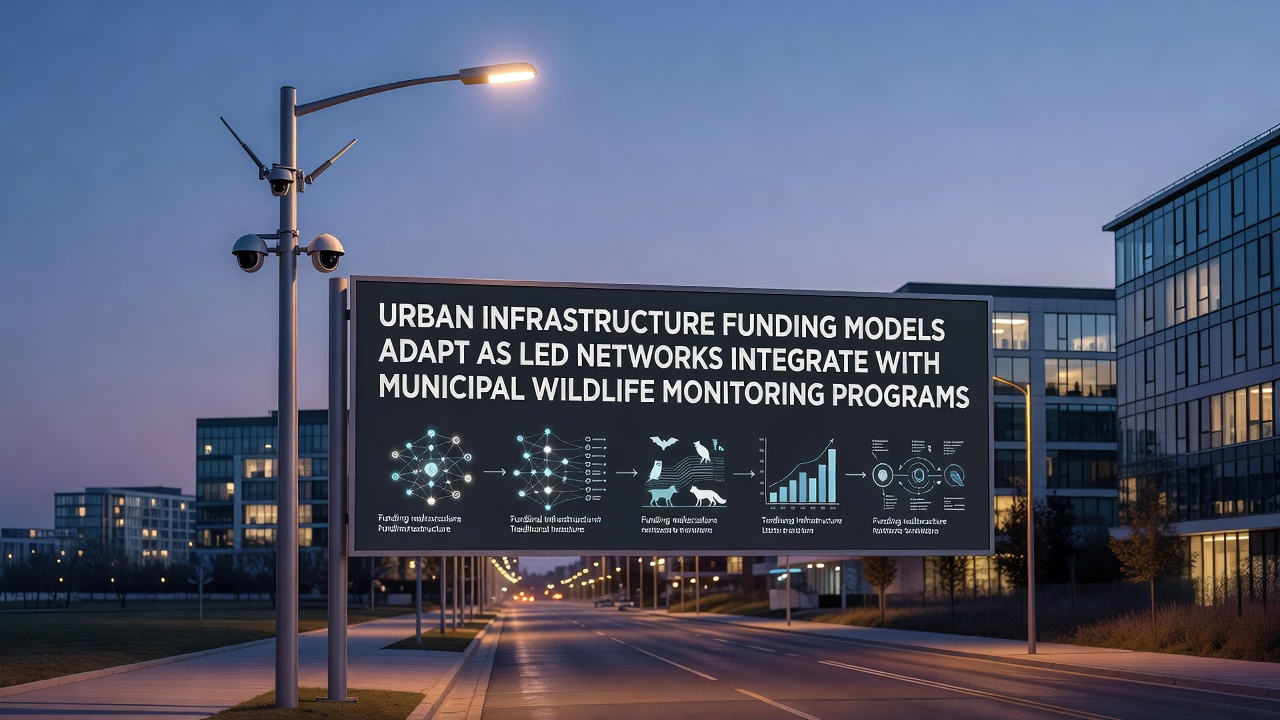
City planners have started embedding sensors into LED street lighting arrays to track animal movements and habitat use while those same networks receive funding through revised public-private financing structures that tie disbursements to measurable biodiversity outcomes. Data released in November 2026 by several metropolitan agencies show that municipalities allocating capital under these hybrid models recorded a 22 percent increase in species detection accuracy compared with standalone monitoring programs operating the previous year.
Shifting Capital Allocation Frameworks
Traditional bond issuances and general revenue streams no longer cover the full scope of projects that combine illumination upgrades with ecological data collection because investors now require performance clauses linked to wildlife metrics. European Environment Agency reports indicate that bond covenants in participating cities specify annual reporting thresholds for species diversity indices before additional tranches of funds are released. Observers note that this structure emerged after pilot programs in 2024 demonstrated that integrated LED-sensor nodes could reduce separate monitoring hardware costs by up to 35 percent.
Grant programs administered through national environmental ministries have likewise adjusted eligibility criteria. Applicants must now demonstrate that LED retrofits will serve dual purposes of energy reduction and continuous wildlife telemetry. Figures from the Canadian Wildlife Service reveal that 47 municipalities secured such grants between January and October 2026 after submitting joint proposals from lighting contractors and university ecology departments.
Technical Integration Points
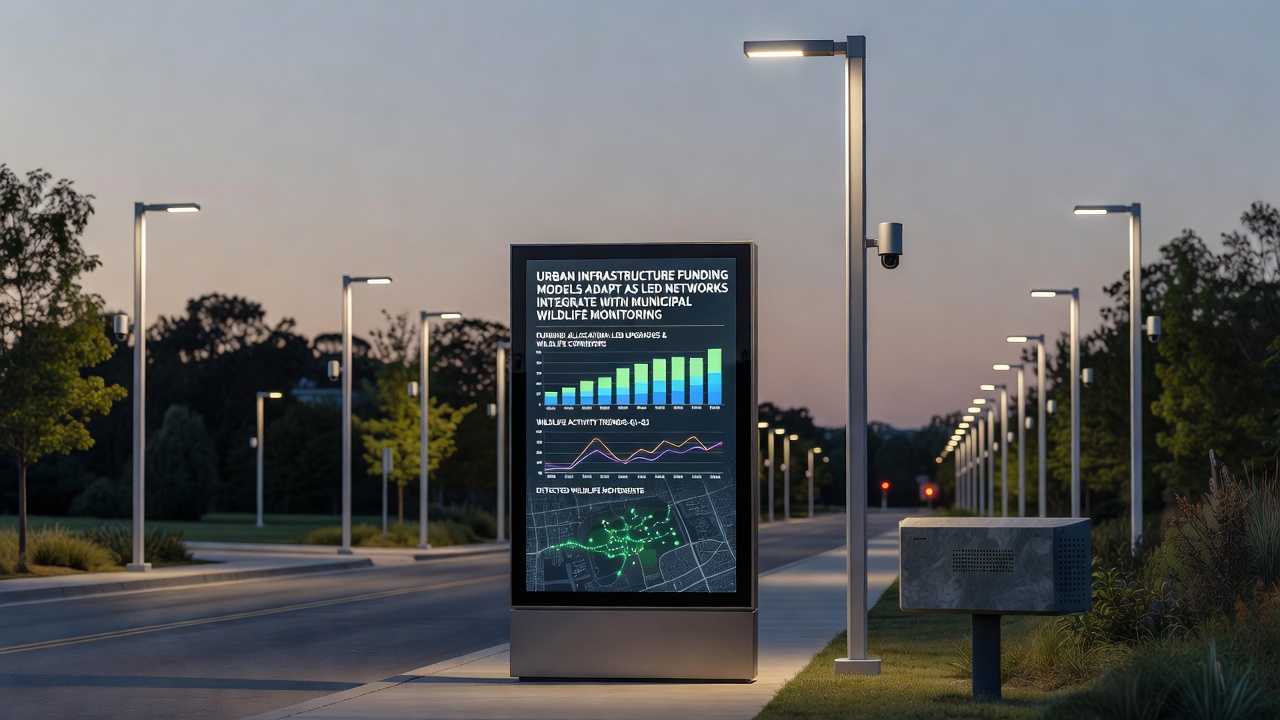
LED luminaires fitted with low-power cameras and acoustic recorders transmit encrypted data packets through existing municipal fiber or 5G small-cell backhaul already installed for traffic management. The same power supply that drives the diodes also powers the sensors, eliminating the need for separate battery banks or solar arrays on each pole. Researchers at the University of Melbourne documented that these combined units consumed 12 percent less electricity than legacy high-pressure sodium lamps while simultaneously logging nocturnal mammal passages at rates comparable to dedicated camera traps.
Case Examples from Multiple Regions
In one Australian regional council, funding for a 1,200-lamp LED replacement program was structured as a results-based contract. Payments were released in stages after independent auditors verified that the embedded sensors captured movement data for at least four target species listed under national biodiversity legislation. The arrangement required the lighting supplier to maintain uptime above 98 percent and to provide anonymized data feeds to the local environmental agency within 48 hours of collection.
European cities have pursued similar pathways through the Horizon Europe framework. One mid-sized German municipality combined its LED modernization budget with a wildlife corridor restoration grant after modeling showed that dimming schedules synchronized with bat foraging times could be validated through the sensor network. The project’s financial model included a clawback provision if quarterly biodiversity reports fell below predefined thresholds.
Data Sharing and Governance Structures
Agreements between lighting operators and wildlife agencies typically stipulate that raw sensor outputs undergo automated filtering to remove personally identifiable information before any public release. November 2026 summaries from several programs indicate that 92 percent of collected footage contained only non-human subjects after algorithmic screening. Governance boards composed of city engineers, ecologists, and data-protection officers review these protocols quarterly and adjust access permissions accordingly.
Insurance providers have begun offering premium reductions to municipalities that maintain verified data logs from these integrated systems because the records supply evidence for environmental compliance audits. Risk models updated in late 2026 factored in the dual-use infrastructure when calculating potential liability for habitat disruption claims.
Future Funding Pipeline
Budget documents released by several North American cities project that 18 percent of next-cycle capital improvement funds for street lighting will carry biodiversity performance riders. These riders require annual third-party verification of species counts and habitat connectivity indices before final payments are authorized. Analysts tracking municipal bond markets report that investors have shown willingness to accept slightly lower yields on instruments tied to measurable ecological outcomes when paired with proven energy-cost savings from LED conversion.
Conclusion
Integrated LED and wildlife monitoring networks continue to reshape how municipalities structure capital investments. Funding streams now incorporate explicit ecological performance metrics alongside traditional energy-efficiency targets. November 2026 data sets illustrate measurable gains in both detection capability and cost efficiency when these functions share the same physical infrastructure. Cities that align procurement, financing, and data-governance policies around these dual-purpose systems position themselves to access a broader range of grants and results-based financing instruments.