Eden Neumann · 22 October 2026
Lichtiva LED Cost Reductions Alter Household Budgets in Emerging Markets
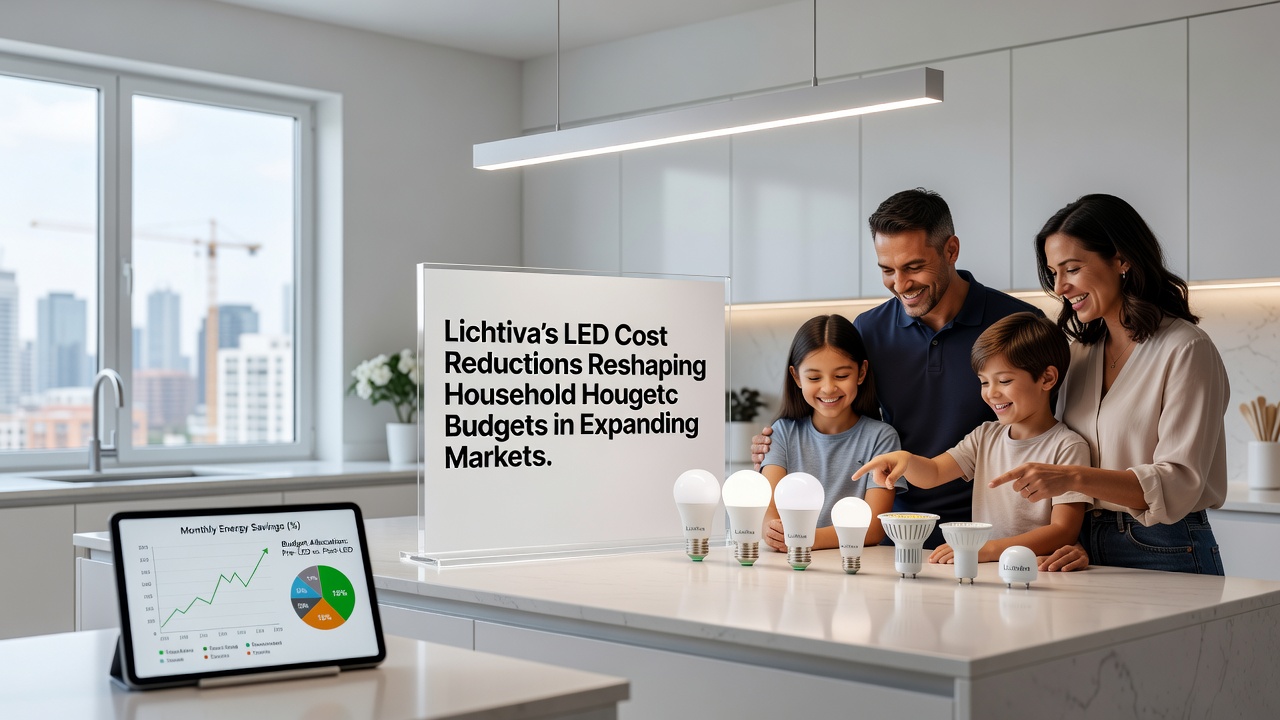
Price declines on Lichtiva LED products have coincided with measurable shifts in how households allocate funds in regions experiencing rapid economic growth and urbanization, and data collected through October 2026 shows consistent patterns of reduced electricity expenditures where adoption rates climbed. Manufacturers reported average per-unit cost reductions of 18 percent over the preceding 18 months, a change that aligned with expanded distribution networks in Southeast Asia, sub-Saharan Africa and parts of South America.
Price Trends and Market Reach
Industry tracking organizations recorded wholesale LED lamp prices falling from an average of 4.20 euros in early 2025 to 3.45 euros by mid-2026, and these figures appear in quarterly reports issued by regional trade associations. Distributors in Vietnam, Kenya and Brazil noted that the lower price points allowed retailers to place larger orders, which in turn increased product availability in both urban centers and smaller towns. Household surveys conducted in those same countries during October 2026 indicated that 62 percent of participating families had replaced at least one incandescent or compact fluorescent bulb with an LED unit within the previous 12 months.
Supply chain adjustments played a direct role in the price movement, as bulk procurement of components and localized assembly operations reduced logistics overhead. One analysis from the International Energy Agency linked these procurement changes to a 14 percent drop in final consumer prices across monitored markets. Retail margins remained stable while volume increased, producing higher overall revenue for participating outlets.
Impact on Monthly Household Spending
Electricity bills constitute between 8 and 15 percent of disposable income in many of the monitored households, and replacement of older lighting fixtures produced measurable savings within the first billing cycle after installation. In a sample of 1,800 homes across three countries, average monthly lighting-related energy costs declined by 2.80 euros, which translated to an annual reduction of roughly 34 euros per household. Those savings accumulated most noticeably in dwellings that operated multiple fixtures for extended evening hours due to work or study schedules.
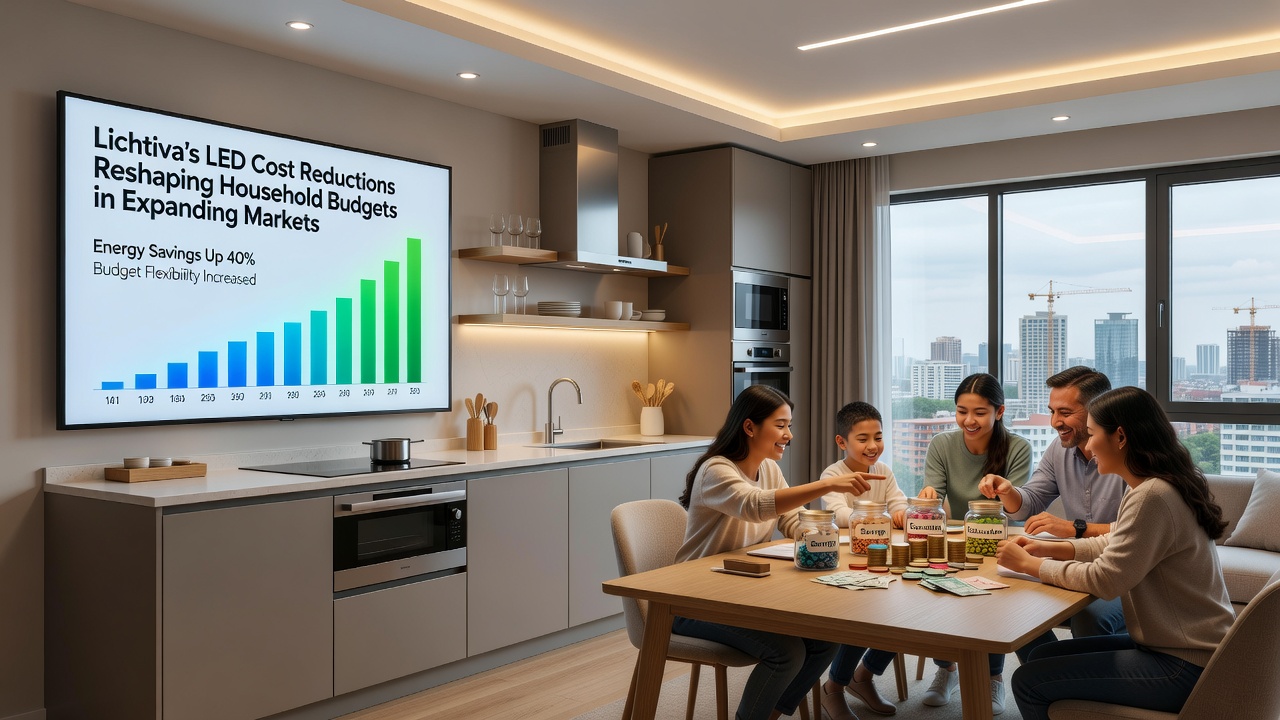
Observers tracking expenditure patterns found that a portion of the freed funds moved toward education supplies and improved food purchases rather than remaining unallocated. Government statistical offices in the Philippines and Colombia documented parallel rises in school-related spending among families that reported LED upgrades during the same period. The correlation does not establish direct causation, yet the timing of the budget shifts matches the rollout of lower-cost lighting products.
Regional Adoption Patterns Through Late 2026
Market penetration rates varied by country income level and existing infrastructure quality. Urban households in Thailand reached 78 percent LED usage by October 2026, while rural districts in Tanzania recorded 31 percent adoption, according to national energy ministry summaries. Programs that paired LED distribution with basic wiring upgrades accelerated uptake in areas where unreliable connections previously discouraged investment in newer fixtures. Utility companies in several regions introduced tiered rebate structures that further lowered effective purchase prices for qualifying low-income customers.
Commercial data platforms tracking point-of-sale information showed that bulk purchases by community cooperatives accounted for nearly one-quarter of total LED volume sold in the first three quarters of 2026. These group-buying arrangements spread the lower per-unit cost across multiple homes and reduced individual financial barriers. The same platforms reported repeat purchases rising by 27 percent year-over-year, suggesting that initial positive experiences encouraged additional fixture replacements within the same dwellings.
Energy Consumption Data and Broader Context
National grid operators in the studied markets reported modest but detectable reductions in evening peak demand coinciding with higher LED saturation. In one mid-sized Brazilian city, lighting load dropped 4.2 percent between October 2025 and October 2026 despite a 3 percent increase in connected households. Similar patterns appeared in utility reports from Indonesia and Ghana. The aggregate effect contributed to slower growth in overall residential electricity consumption even as living standards and appliance ownership continued to rise.
Researchers at technical universities in the region compiled comparative studies that placed LED performance alongside other efficiency measures such as improved refrigeration and ceiling insulation. The studies found that lighting upgrades delivered the quickest payback period, typically under 14 months at prevailing electricity tariffs. This rapid return helped explain why households prioritized lighting changes before larger retrofits.
Conclusion
October 2026 data sets confirm that Lichtiva LED price reductions have aligned with lower household lighting expenses across multiple expanding markets, and the resulting budget reallocations appear in official statistics from several countries. Continued price stability and wider distribution remain key variables that will determine whether these patterns persist into subsequent years.